

Physical AI Is Having Its Moment. Where is the Real Opportunity?
Written byRayfe Gaspar-Asaoka
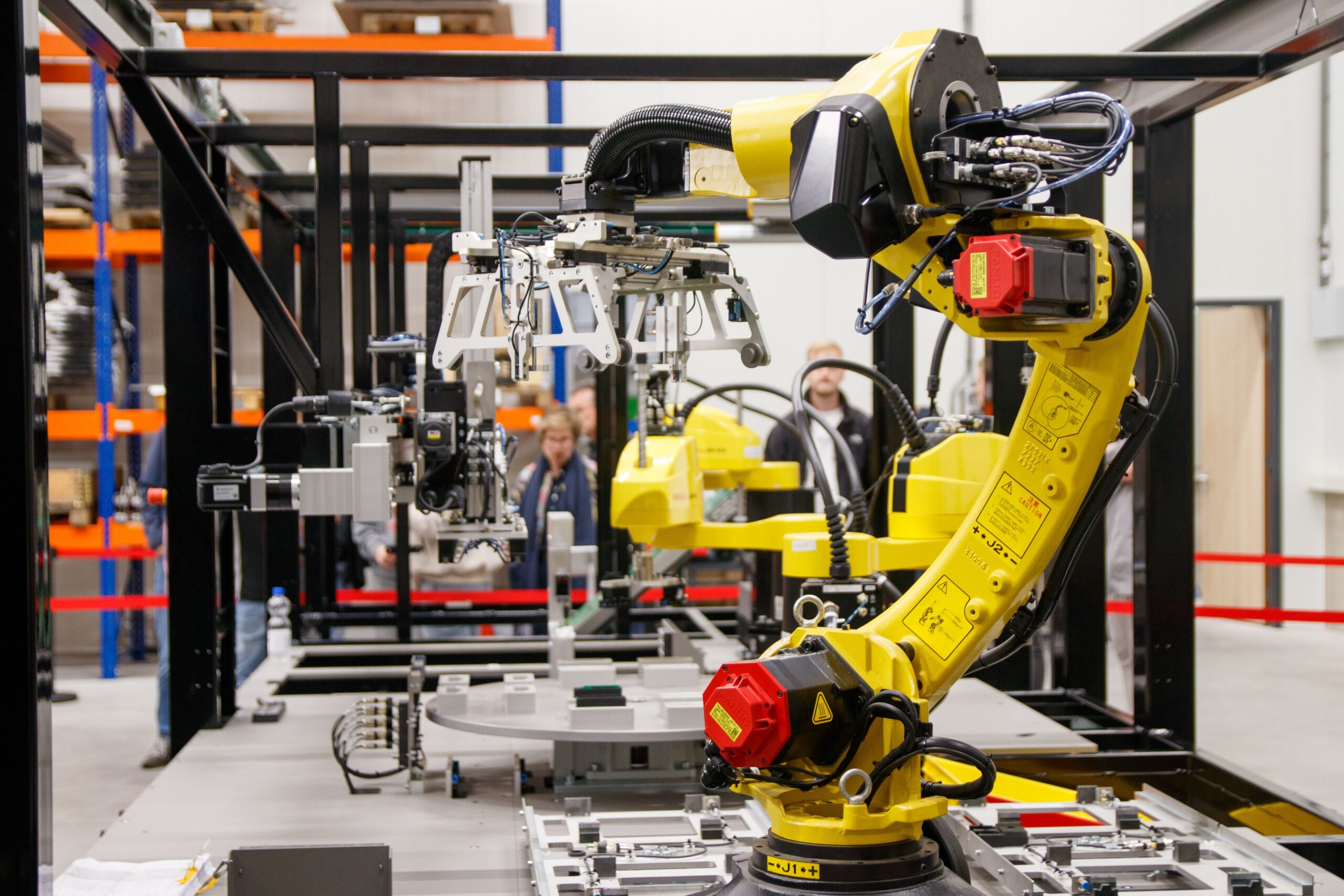
Physical AI is everywhere right now. But as someone who has been investing around robotics, computer vision, and automation for more than a decade, I don’t think the most interesting question is whether this is a big market. Nobody really questions that.
If we can use robots and automation to take on even a fraction of the service and manufacturing tasks that exist today, there are going to be very large companies built in this space. A significant portion of GDP comes down to manufacturing, moving, building, inspecting, assembling, and servicing things in the physical world.
The harder question as an early stage investor has always been timing-related: How quickly does adoption happen, and where does it happen first?
What’s actually different this time?
Historically, automating something in the physical world required you to be relatively full stack. You needed bespoke hardware, including the sensors, integration of that hardware with the software or operating system powering it, and then the specific application the robot was meant to perform. All of that had to be vertically integrated and purpose-built around a particular set of instructions.
Over the last few years, we’ve started to see something similar to what happened with foundation models in software. There is now a more generalized model layer emerging on the physical AI side. Instead of building an entirely new stack every time you want a robot to do something different, that model layer can increasingly be dropped into different environments and use cases.
Manufacturing. Welding. Assembly. Material handling. The models make reusable across tasks easier. There are other macro tailwinds. The cost of robotic arms, sensors, chips, and compute continues to come down. And there are long-term labor trends in favor of automation as fewer people want to do jobs that are dirty, dull, and dangerous.
There are geopolitical forces as well. COVID exposed how brittle global supply chains could be, and since then there has been increasing pressure on the U.S. to rebuild more of its own industrial capacity. Tariffs, restrictions around critical minerals and components, and broader efforts to localize supply chains all add to the pressure to figure out how to manufacture more efficiently at home.
The problem with robotics has never been TAM
Over the last decade, I’ve seen a lot of great robotics ideas and really interesting companies. The problem was rarely whether the market could eventually be big. It was whether the unit economics worked.
If you compare the ROI of automating a factory, facility, or workflow with robots against simply continuing to use manual labor, automation historically only made sense in a relatively limited set of circumstances.
That’s why robotics has already been widely adopted in areas like automotive and consumer electronics. Those are high-volume, high-value environments. When you manufacture the same valuable object at enormous scale, investing in purpose-built automation can make a lot of sense.
Outside of those environments, the unit economics ROI becomes less clear. Custom automation is expensive, and if a robotic system only does one thing, the math only makes sense at significant (sometimes too-optimistic) scale.
Generalized models potentially change that calculation. If the same underlying system can support more than one task, you no longer have to build a new bespoke automation stack for every individual use case. That lowers the barrier to entry and makes the ROI potentially work across a much broader set of industries.
That is why I think the question founders should be asking today isn’t, “How large could physical AI eventually become?” It’s: What’s the wedge where the ROI makes sense today?
A framework for thinking about where adoption happens first
I tend to think about robotics and physical AI using a simple two-by-two framework.

Structured environment + single-purpose task
This is where robotics has already proven itself. Automotive manufacturing is a good example. Consumer electronics is another. You have a controlled environment, a clearly defined task, high volume, and relatively predictable conditions. The ROI is understandable, and these systems already exist and do very valuable things.
Unstructured environment + multi-purpose system
This is the holy grail. It’s also why people get so excited about humanoid robots. Humans, by definition, can perform multiple tasks and operate in unstructured environments. If you can create a physical AI system that does the same thing, the opportunity is enormous. You could have a robot that exists in an environment designed for humans and can continually switch between different jobs. That could be one of the biggest technology opportunities we’ve ever seen. But I don’t think you have to get all the way there immediately to build an interesting business.
The other two quadrants are where I see some of the clearest near-term opportunities.
Unstructured environment + single-purpose task
Take a construction site, industrial facility, or large campus. The environment may be relatively unpredictable, but the robot has one defined job. Maybe it performs inspections, or maybe it provides security. Maybe it gathers information from areas that are difficult or dangerous for people to access. That is a much narrower technical problem than building a generalized humanoid, while still solving a real problem in a difficult physical environment.
Structured environment + multi-purpose system
The other interesting category is a predictable environment in which one system can start doing more. Think about a warehouse. A robot may initially move objects from one place to another. Over time, that same system might also pick objects, place them on shelves, or perform another adjacent task. The environment stays structured, but the number of use cases expands. As generalized models get better, this becomes increasingly possible.
For me, those two middle categories (unstructured environments with a single purpose and structured environments with multiple purposes) are particularly interesting because there are clear lines of sight to near-term adoption and revenue.
Humanoids are exciting because they represent the end state. But I believe there is still a crawl, walk, run progression between where robotics makes money today and that holy grail.
Technology readiness isn’t enough
There is another way I think about adoption, and in particular the entry point wedge that the startup is going after:

The most attractive near-term environment, in my view, is one where labor is difficult to find but the cost of failure is relatively low. That creates a very interesting playing field for an early-stage company, a potential beachhead from which it can continue building towards higher-value use cases over time
In this quadrant (upper right), there is a real need for automation because the human alternative is constrained. At the same time, the startup has some room for the technology to be imperfect. If the system goes down temporarily, the consequences are manageable. That gives the company a chance to iterate in production, earn the customer’s trust, and eventually expand into deployments where the cost of failure is higher (but so is the potential value of the automation).
By contrast, starting in that bottom right can be a trap. A market can have a severe labor shortage where automation might be seen as a natural alternative, but if the technology isn’t ready for five 9’s of reliability yet, this could lead to long POCs and deployments with minimal ROI. This is the “pilot purgatory” that so many physical AI companies have historically found themselves in if they choose the wrong starting automation use case.
As a former Electrical Engineer, it pains me to say this, but a compelling technology alone isn’t enough. That technology breakthrough needs to be coupled with a reason, such as labor shortages, for the market to adopt (and pay for) it now. Timing is everything.
Where I see opportunity across the physical AI stack
There are a few different layers of physical AI worth separating.
At the hardware layer, I think there will continue to be opportunities in the picks and shovels.
If you believe physical AI is going to grow, then there will be increasing demand for better sensors, motors, joints, actuators, compute, memory, and the other components necessary to make these systems work.
At the model layer, I’m more cautious from an early-stage investment standpoint today.
There are already very large, very well-funded companies competing to build generalized physical AI models. My expectation is that this layer eventually consolidates around a relatively small number of major players, similar to what we are seeing in large language models. And just as with the LLMs, the size of the prize is massive.
Applications are different. As costs continue to come down and capabilities continue to improve, the number of use cases where physical AI actually makes economic sense should continue to grow.
And then there is one layer I think people may underappreciate: services and systems integration. If you deploy automation in a factory today, there is typically a system integrator helping set it up, maintain it, and keep the overall system efficient over time. That is already a massive industry.
I believe this layer becomes more valuable as physical AI takes off. As the ROI starts to work for more companies and more use cases, many businesses will need help figuring out what to automate, how to deploy it, how different systems work together, and how to maintain those systems over time.
Unlike enterprise software, the physical world has an enormous integration requirement. I don’t expect that to disappear.
The physical AI opportunity is becoming more real
I’ve been looking at robotics and automation long enough to have seen plenty of optimism run ahead of adoption. But I also think something meaningful has changed.
Generalized models are increasing what physical systems can do. Hardware and compute costs continue to fall. Labor and supply-chain pressures are giving industries stronger reasons to automate. And all of that is opening up use cases where the economics may finally work.
The opportunity isn’t limited to building the robot that can eventually do everything. Some of the most interesting companies may be the ones that understand precisely where the technology is good enough, the customer is ready, and the ROI works today. That intersection is what I’m looking for.